
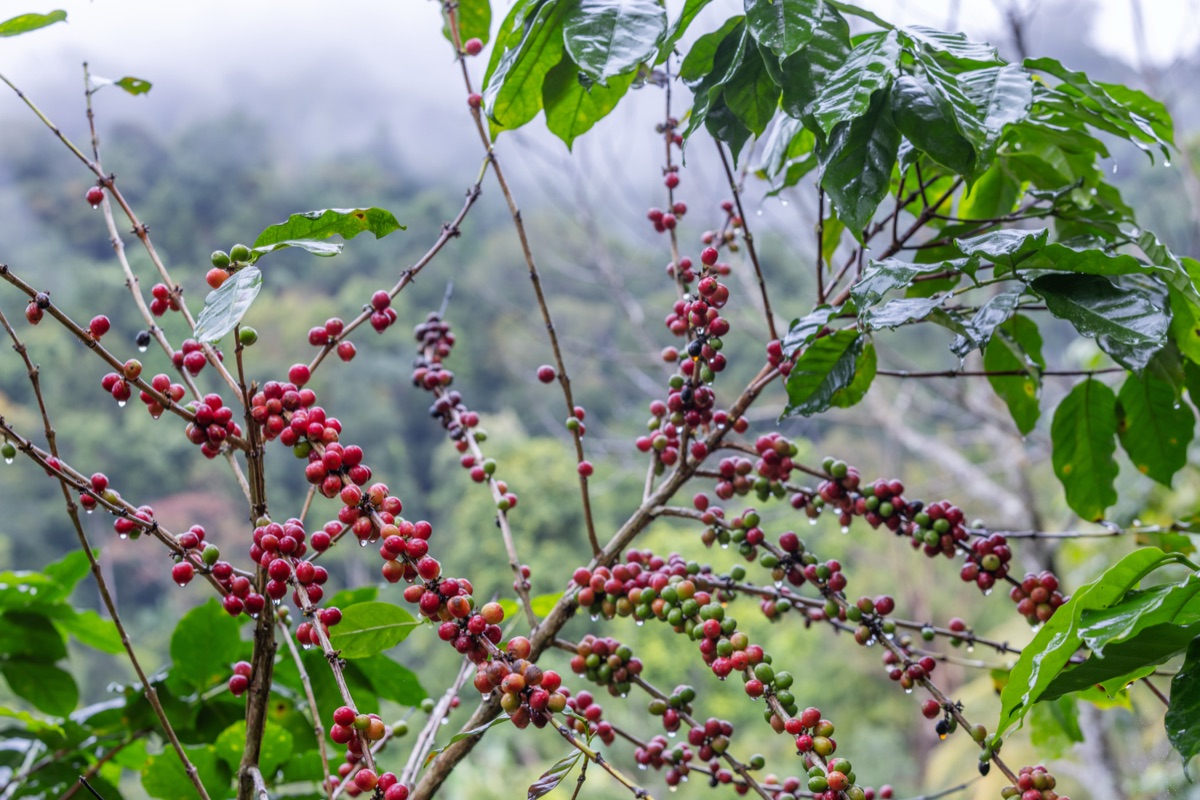
What Makes Costa Rican Coffee Special?
History, Arabica varieties, eight growing regions, and why Costa Rican coffee consistently stands out in the specialty market.
If you've ever tasted a truly great cup of Costa Rican coffee — bright acidity, clean sweetness, a finish that lingers — you already know there's something different about it. But what exactly makes it special, and why do specialty coffee roasters keep coming back to this small Central American country?
A country that chose quality over quantity
Costa Rica made a decision few coffee-producing countries have made: in 1989, it became the first country in the world to ban the cultivation of Robusta coffee by law. Only Arabica is grown here. That single policy decision changed everything. It meant farmers couldn't cut costs by planting lower-quality beans. It forced the entire industry to compete on taste.
The result is a country with over 200 years of coffee tradition, where quality isn't a marketing claim — it's a legal requirement.
Eight growing regions, eight distinct cups
Costa Rica is a small country, but geography works in its favor. Two mountain ranges, two coastlines, and dramatic altitude changes create eight certified growing regions, each with its own microclimate and flavor profile:
- Tarrazú — The most famous. High altitude (1,200–1,900m), cool nights, bright acidity, citrus notes. Beloved by specialty roasters worldwide.
- Valle Central — The historical heartland of Costa Rican coffee. Well-balanced, medium body, caramel sweetness.
- Tres Ríos — Small production, exceptional quality. Often called "the Bordeaux of Costa Rica."
- Brunca — Southern region, lower altitude, fuller body, chocolate and nut notes.
- Turrialba — Lower altitude, milder flavor. Good for blends and espresso.
- Orosi — Consistent quality, sweet and clean, accessible flavor profile.
- Guanacaste — Northwestern region, tropical microclimate, fruity and full-bodied.
- Pérez Zeledón — Emerging region, similar profile to Tarrazú, growing recognition.
The honey process advantage
Costa Rica didn't just grow great coffee — it helped pioneer the honey process, a method that sits between washed and natural processing. The coffee cherry's fruit mucilage is partially left on the bean during drying, imparting natural sweetness and fruit character without the fermented intensity of a natural process.
The result is a cup that's clean but complex, sweet but not heavy. It's one reason Costa Rican coffee is so approachable for people new to specialty coffee, while still satisfying experienced palates.
Altitude is everything
The best Costa Rican coffees are grown above 1,200 meters. At high altitude, temperatures are cooler, coffee cherries develop more slowly, and the beans accumulate more sugars and organic acids. That translates directly into complexity in the cup — the kind you can't manufacture.
Tarrazú, at up to 1,900 meters, produces some of the most altitude-grown coffee in Central America. The thin air and temperature swings between day and night are the natural flavor machine behind every great cup from that region.
Why it matters for home brewers
The National Coffee Association reported in 2025 that 85% of coffee drinkers brew at home. If you're one of them, the coffee you buy matters more than any piece of equipment you own. A quality single-origin Costa Rican coffee will taste better from a $20 pour-over dripper than a generic supermarket blend from a $500 espresso machine.
The origin story — the altitude, the region, the process — isn't just marketing. It's the reason your coffee tastes the way it does.
What to look for
When buying Costa Rican coffee, look for:
- Region on the label — "Costa Rica" alone isn't enough. Tarrazú, Valle Central, Tres Ríos tell you where and why it tastes the way it does.
- Processing method — Honey, washed, or natural. Each produces a different cup from the same origin.
- Roast date — Specialty coffee is best within 2–4 weeks of roasting. Avoid anything without a roast date.
- Altitude — Higher is generally better for complexity and acidity.
Want to try Costa Rican specialty coffee?
We're launching soon with single-origin coffees from Tarrazú and Valle Central. Join the waitlist to be first.
Join the U.S. Waitlist