
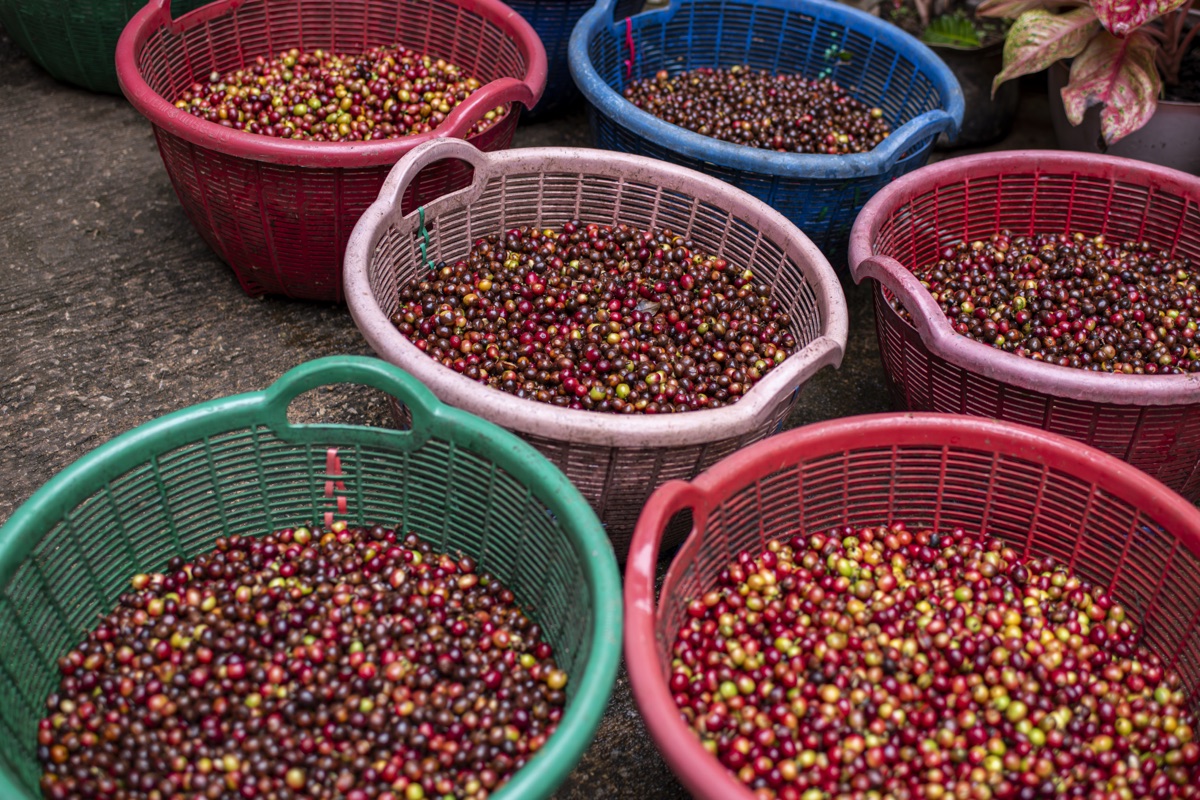
The Honey Process — Why Costa Rican Coffee Tastes Different
Not washed, not natural. The honey process is Costa Rica's signature processing method — and it changes everything about how your coffee tastes.
If you've seen "honey process" on a coffee bag and wondered what it means — or why it matters — you're not alone. Processing method is one of the most underrated factors in how coffee tastes, and Costa Rica is where the honey process was refined into an art form.
First, how coffee is normally processed
A coffee bean is actually the seed inside a coffee cherry. To get from fruit to roastable bean, producers need to remove the outer layers: the skin, a sticky mucilage layer, and a parchment shell. How they do that is the processing method — and it dramatically affects flavor.
There are three main approaches:
- Washed (wet process): All fruit is removed before drying. The bean dries clean. Result: bright acidity, clarity, clean flavor.
- Natural (dry process): The whole cherry dries with fruit intact. Result: heavy body, intense fruit, sometimes fermented or wine-like notes.
- Honey process: The skin is removed, but the sticky mucilage is left on the bean during drying. It's the middle path.
What honey process actually means
"Honey" doesn't refer to bees or actual honey — it refers to the sticky, honey-like mucilage left on the bean. As the coffee dries on raised beds (usually for 2–4 weeks), that mucilage ferments slowly, imparting sweetness and fruit character into the bean without the intensity of a full natural.
The color of the dried parchment gives away how much mucilage was left on:
- Yellow honey: Least mucilage left (25–50%). Closest to washed. Clean, sweet, delicate.
- Red honey: More mucilage (50–75%). Richer sweetness, stone fruit notes, more body.
- Black honey: Almost all mucilage (75–100%). Closest to natural. Intense, complex, jammy.
Why Costa Rica does it so well
Honey processing requires precise control of drying conditions — too much moisture and the coffee ferments badly; too little and the mucilage doesn't impart its character. Costa Rica's climate in the high-altitude regions (cool nights, dry season timing) is naturally suited to this method.
Costa Rican producers also invested early in raised drying beds and modern wet mill equipment — beneficios — that allow them to control exactly how much mucilage remains on each batch. The precision is part of why Costa Rican honey process coffees are so consistent.
What it tastes like in the cup
A well-made Costa Rican honey process coffee is approachable for people new to specialty coffee, while still offering complexity for experienced drinkers. Expect:
- Natural sweetness — no sugar needed
- Stone fruit notes: peach, apricot, sometimes cherry
- Smooth body, medium weight
- Gentle acidity, not sharp or aggressive
- A clean, lingering finish
It's the reason Costa Rican coffee is so often described as "balanced" — the honey process finds the sweet spot between the brightness of a washed coffee and the intensity of a natural.
How to brew honey process coffee at home
Honey process coffees respond well to most brewing methods, but they particularly shine in:
- Pour over (V60, Chemex): The clarity of the method lets the fruit sweetness come through cleanly.
- AeroPress: Brings out body and sweetness with a shorter brew time.
- Cold brew: The natural sweetness of honey process makes exceptional cold brew — less bitterness, more fruit.
For water temperature, 91–93°C (196–200°F) works well — slightly cooler than you'd use for a washed coffee, to avoid over-extracting the sweeter notes.
Try our honey process Tarrazú
We're launching with a red honey process from Tarrazú — one of the best expressions of Costa Rican coffee. Join the waitlist.
Join the U.S. Waitlist